Smart Devices
Tetradapt hardware that runs the system and connects to it: presence and fall detection sensors, enterprise Bluetooth, standalone voice, a sip-and-puff interface, and controllers for elevators, powered doors and beds.
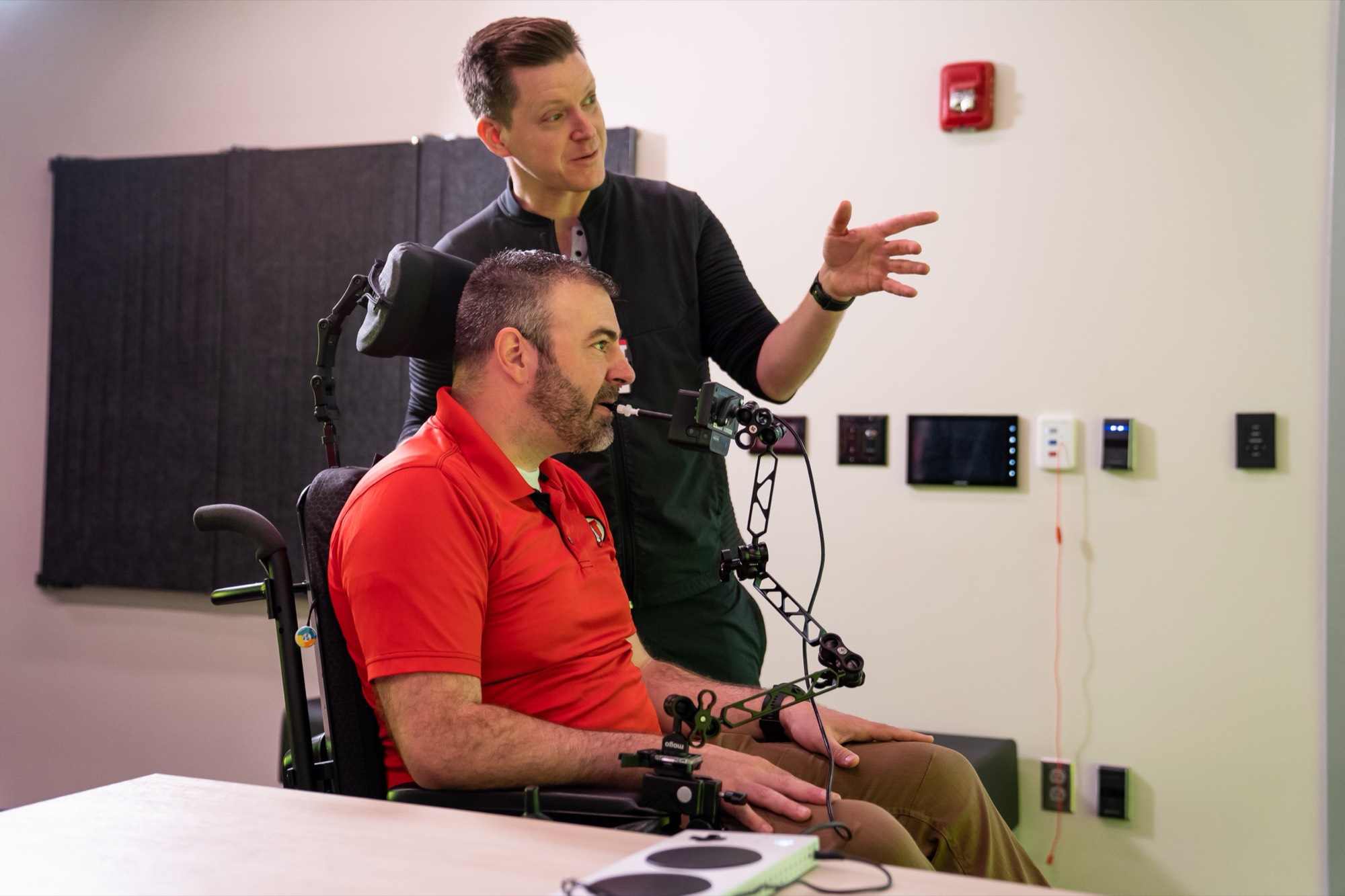
Tetradapt hardware
Many devices, one system
Each device runs on its own or as part of a Smart Hospital or Smart Home installation. Ask for a quote on any of them and we will come back with options for your rooms or your home.
Presence Sensor
A millimeter-wave sensor that knows when a room is occupied. It drives power-save mode when a room is empty, restores the patient’s settings on return, and powers presence-based automations.
- Detects presence, not identity
- Powers room power-save and provider-presence automations
- Used in hospital rooms and homes
- Hospital
- Home
Enterprise Bluetooth
A Bluetooth music and audio device built for shared rooms. Rolling pairing codes, a custom name per room and remote resetting mean the next patient starts clean.
- Pairing codes roll on discharge through your ADT feed
- Custom name per room
- Reset remotely from the staff app
- Hospital
Standalone Voice Device
Tetradapt’s own microphone and speaker for rooms and homes. Voice control that stays in the room and works with the rest of the system or on its own.
- Microphone and speaker in one unit
- Runs the Home Hub in residential installs
- Works alongside touch, breath and other inputs
- Hospital
- Home
Sip-N-Puff Interface
A Bluetooth breath-control interface. Sips and puffs become selections in the same app used for voice and touch, for people who cannot use either.
- Bluetooth, pairs with the room or home system
- Same app as voice and touch
- Hospital
- Home
Elevator Voice Controller
Voice control for building elevators, so a person in a power chair can call the elevator and choose a floor without help.
- Integrates with building elevator systems
- Part of an accessibility-first building
- Hospital
- Home
Fall Detection Sensor
Fall detection without video cameras. These small devices can be placed in patient rooms and bathrooms, where falls more commonly occur.
- No video cameras
- Fits patient rooms and bathrooms
- Used in hospital rooms and homes
- Hospital
- Home
Universal Powered Door Controller
Opens and closes powered doors by voice, touch, sip-and-puff or any other input a person uses, so they can come and go without waiting for help.
- Works with powered door operators
- Same controls as the rest of the room or home
- Hospital
- Home
Universal Bed Controller
Voice and adaptive control of an adjustable bed at home, so a person can change position without help.
- Voice, touch, breath or other adaptive input
- For adjustable beds at home
- Home
Supported inputs
Every way a person can say what they want
The devices above are Tetradapt hardware. The system also works with the inputs people already use, from touch screens to eye gaze, so a room can be controlled by whatever works for that person on that day.
Touch
iPad, iPhone, Android and Voalte touch screens, with patient and staff app versions.
Voice
Room and home voice control through the Tetradapt standalone voice device.
Breath
Sip-and-puff control through the Tetradapt Bluetooth interface.
EMG
Muscle-signal controllers from Tetradapt and Meta Neural.
Eye gaze
Eye-tracking selection for people with very limited movement.
Head and tongue
Head movement and tongue-click inputs, including tongue-click alerts.
Automations
Rooms that respond on their own: presence, provider entry, power save, protocols.
Works together
Where each device is used
Which devices belong in a hospital room, which belong at home, and which do both.
| Device | Smart Hospital | Smart Home |
|---|---|---|
| Presence Sensor | Yes | Yes |
| Enterprise Bluetooth | Yes | No |
| Standalone Voice Device | Yes | Yes |
| Sip-N-Puff Interface | Yes | Yes |
| Elevator Voice Controller | Yes | Yes |
| Fall Detection Sensor | Yes | Yes |
| Universal Powered Door Controller | Yes | Yes |
| Universal Bed Controller | No | Yes |
Devices connect to the room or home system over Bluetooth or the building network. In a hospital, pairing codes and room devices reset on discharge through your ADT feed, so nothing carries over to the next patient.
Let’s design your solution
Whether for a facility or a home, we tailor the system to the people who will use it.