Smart Hospital
Patient-controlled rooms for rehabilitation and acute care. Lights, blinds, temperature, TV/Entertainment, doors and more, through voice, touch, breath and other adaptive inputs, integrated with your clinical systems.
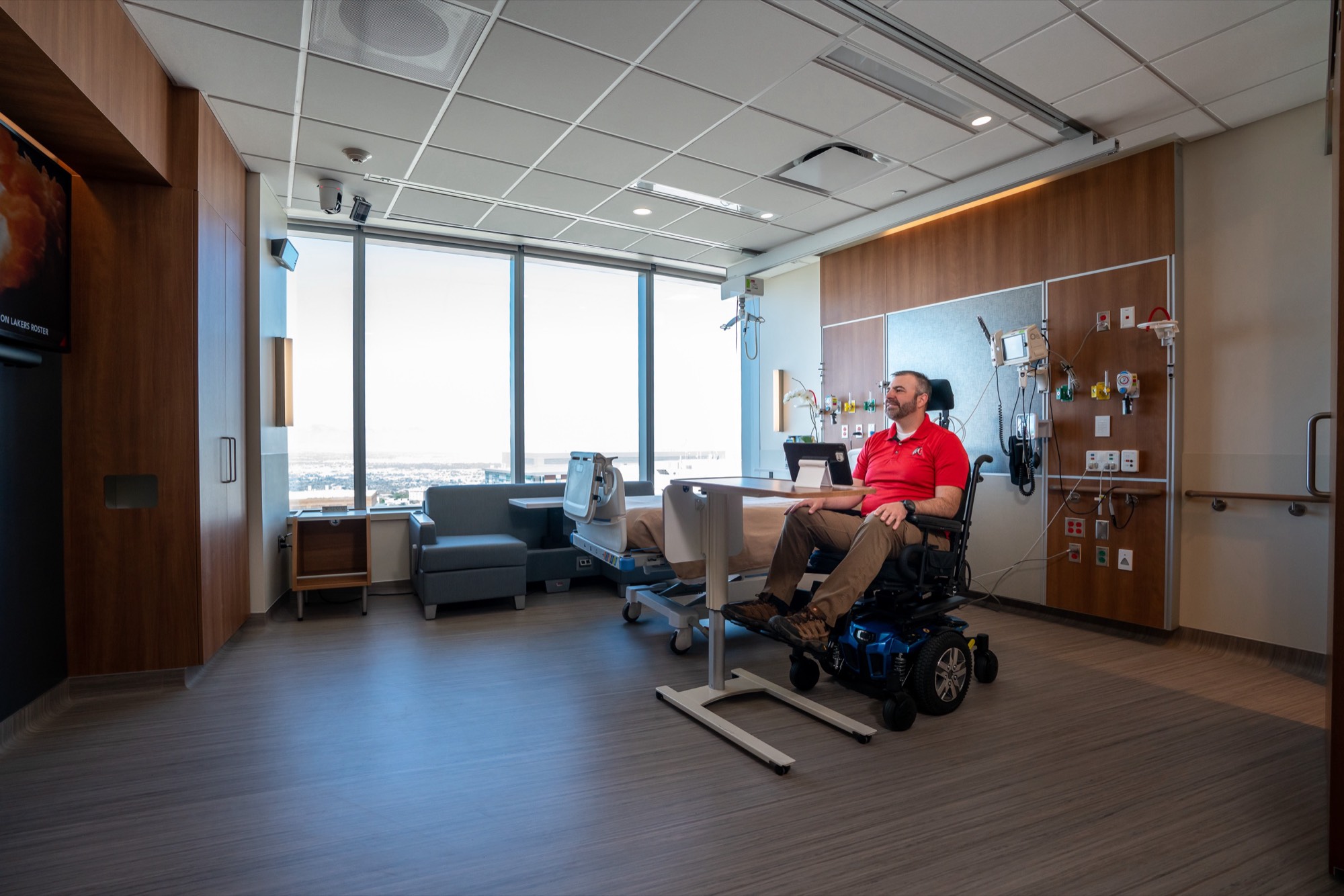
Adaptive control
Every patient, every input, the whole room
Patients recovering from spinal cord injury, stroke or brain injury can switch between voice, breath, EMG, eye gaze and other inputs, and choose what works best for each moment.
How they control it
- Voice commands
- Touchscreen
- Breath (sip-and-puff)
- EMG muscle sensors
- Head movement
- Eye gaze tracking
- Tongue click
- Smart automations
What they control
- Lights and dimming
- Window shades and blinds
- Temperature (HVAC)
- Door operators
- Building elevators
- Bed positioning
- TV/Entertainment
- Streaming apps
- Music (Bluetooth)
- Video calls
- Digital whiteboard (Epic)
- Closet rods, cabinets, fans and curtains
See it in action
Real rooms, real patients
Software
Modules for patients and care teams
Active Living Modules run inside every room and are switched on per patient. Education, reminders, requests, feedback and clinical protocols, in the same app as the light switch.
In-App Tutorial
A live walkthrough inside the app, so patients and families learn the room on day one without waiting for staff.
- Patient
SCI Education
AI-led patient education for spinal cord injury, trained only on your curated documents and protocols.
- Patient
Buddy Calls
Video calls with family, friends and support networks, started from the same app.
- Patient
Pressure Tracker
Reminders and tracking for pressure relief, to help prevent pressure injuries after spinal cord injury.
- Patient
Emergency Alerts
A tongue click or any adaptive input raises an alert to staff or family through paging and nurse-call integrations.
- Patient
Memory Manager
Calendar and reminders for medications, routines, appointments and therapy, in the hospital and at home.
- Patient
TBI Care
Support after traumatic brain injury: memory aids, routines and simplified controls.
- Patient
Stroke Care
Recovery support and daily-living assistance after a stroke.
- Patient
DoC Care
Care protocols for patients with disorders of consciousness, including controlled stimulation.
- Patient
PulseOx Integration
Blood-oxygen readings and other health markers, visible to the patient and the care team.
- Patient
Fall Detection
Fall detection without video cameras. These small devices can be placed in patient rooms and bathrooms where falls more commonly occur.
- Care team
Broadcast Messages
Stay in touch with patient populations. Hospital staff can send messages to Smart Hospital and Smart Home application users. The system supports message creation workflows and can target messages to specific patient populations.
- Care team
Stimulation Protocols
Low-stimulation orders from the medical record enforce limits on TV hours, lighting and visitors, automatically.
- Care team
Survey Feedback
Real-time patient feedback (Qualtrics) that reaches the care team while the patient is still in the room.
- Care team
Request Systems
Patient requests routed to the right department: paging, facilities tickets (CMMS) and IT tickets (ServiceNow). A residential version routes home support requests.
- Care team
Patient Disposition Monitoring
Status tracking and alerts for care teams as a patient’s condition and plan change.
- Care team
Hospital Workflow Automations
Mute the TV when a provider enters, power the room down when it empties, reset devices on discharge. Routine work handled by the room.
- Care team
Compliance
Track medication adherence, therapy completion, eating and daily-routine compliance.
- Care team
Why hospitals choose it
A hospital system, not a consumer gadget
Nothing is taken away
Pillow speakers, wall switches, thermostats and nurse-call initiation keep working exactly as before. The system adds control; it never removes it.
Redundant control paths
Every device answers to more than one input: iPad, voice, sip-and-puff, wall switch. A bad day for one input is not a bad day for the patient.
Works alongside what you run
Runs at the same time as MyChart Bedside and remote nursing, and speaks to Epic, nurse call, beds, RTLS and your ticketing systems.
Enterprise standards
HIPAA-aligned design, managed devices, network segmentation, guest wireless management, and automatic resets on discharge through your ADT feed.
Built for staff too
The staff app on nurse phones controls any room from anywhere in the hospital, shows patient location, and routes requests to the right department.
Rooms that respond on their own
The TV mutes when a provider enters, the room powers down when it empties, and low-stimulation orders from the record are enforced automatically.
Integrations
Connected to the systems you already run
Electronic health record, nurse call, beds, patient portal, feedback, location services and ticketing. The system communicates with any device that supports mainstream protocols, and we certify new ones.























- CBORD
- Lutron
Proven results
Measured in a live hospital
Real-world data from the Craig H. Neilsen Rehabilitation Hospital and peer-reviewed research with the University of Utah PEDEL lab and other investigators.
1.9M
Patient-originated room interactions a year
Across 75 patient rooms at the Craig H. Neilsen Rehabilitation Hospital
5,205
Commands sent by patients every day
Craig H. Neilsen Rehabilitation Hospital
104
Moments of independence per patient, per day
Craig H. Neilsen Rehabilitation Hospital
Impact on staff
88%
Say real-time feedback is valuable for improving patient care
108-nurse survey at NRH
73%
Say knowing patients can give feedback changes how they interact
108-nurse survey at NRH
96%
Find it meaningful when good work is acknowledged through feedback
108-nurse survey at NRH
Source: UUH Smart Room Retrofit deck.
Bring patient-controlled rooms to your facility
See the system in a live demo and talk through integration with the clinical systems you already run.